Documentation
Complete and updated service and product documentation available for viewing and download. Select a category to begin your search.
infoteleves 80 (September)
- General Information: Technological convergence is redefining the future of audiovisual media
- Product news: SmartKom: Smart mast amplifier
- Training: RF frequencies: from broadcasting to mobile communications
- FAQs: How can I protect multifibre cables against moisture?
- Televes facilities: Hotel Selenta Don Carlos, Marbella, Spain
- Televes in the world: ATS, HITEC and TMP
- Our people: Ángela Abreu, Head of the Technical Office and Pre-Sales Department
- Televes Corporation: Europe is building the new industrial competitiveness
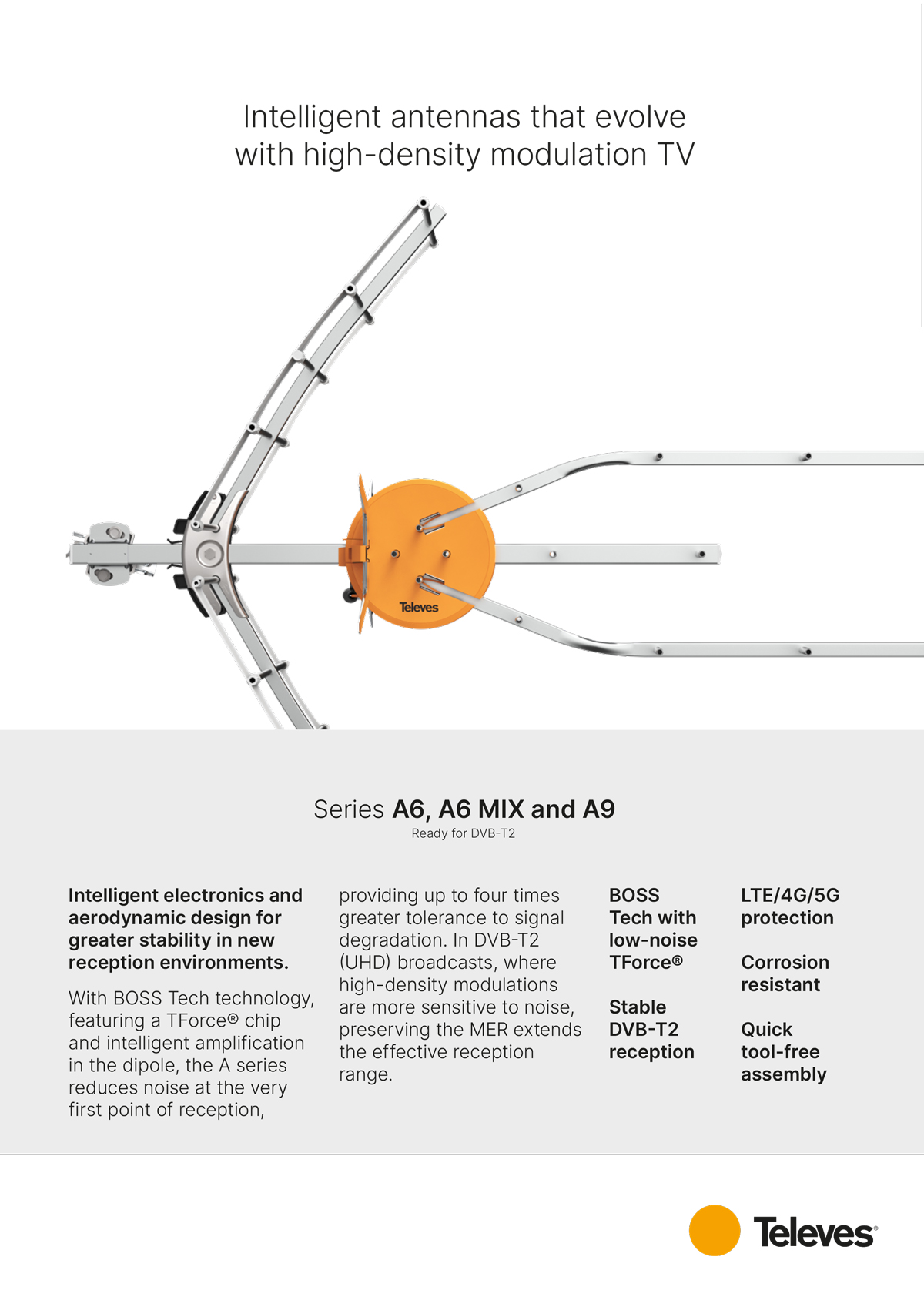
- Announcement: Series A6, A6 MIX and A9 - Intelligent antennas that evolve with high-density modulation TV
General Information
Technological convergence is redefining the future of audiovisual media
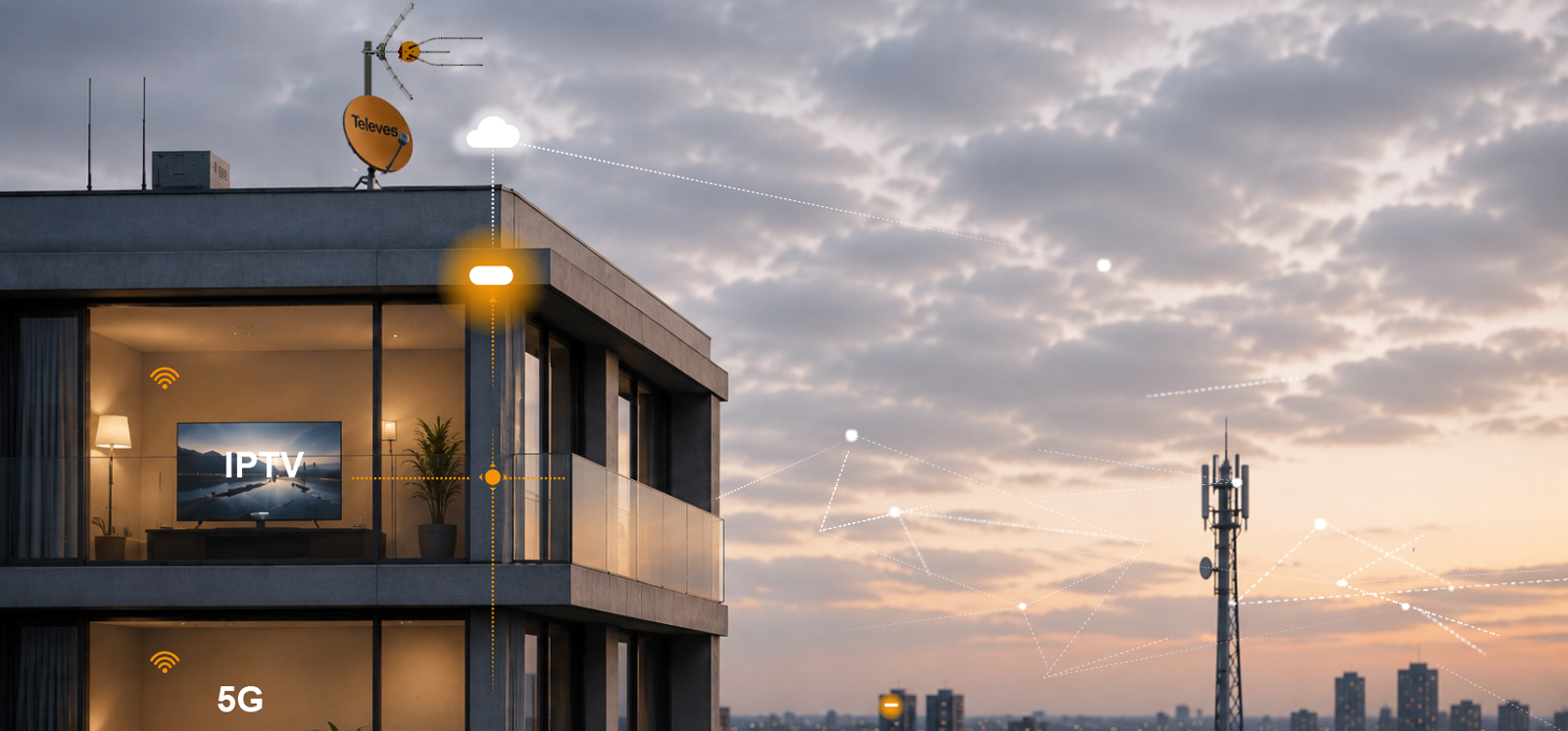
The boundaries between the broadcast and telecommunications worlds are becoming increasingly blurred. Audiovisual distribution is evolving towards IP-based architectures, virtualized infrastructures and cloud environments, where automation, cybersecurity and artificial intelligence work together to deliver more flexible, efficient and scalable networks. Rather than simply a succession of new technologies, the sector is undergoing a transformation of the very model on which infrastructures are designed, managed and operated.
This convergence is accelerating integration between equipment manufacturers, operators, software developers and service providers, driving solutions capable of meeting the needs of an increasingly connected and demanding ecosystem. Interoperability, real-time monitoring and intelligent network management are becoming strategic elements for ensuring service quality and availability.
This is already shaping the evolution of the market. One clear example is the 2026 edition of IBC, the leading international event for the audiovisual industry, which structured much of its programme around this technological convergence, reflecting the new landscape towards which the sector is directing its investments and developments. In this context, Televes Corporation companies such as Gsertel and TRedess took part in the event, sharing a space where the future of audiovisual and communications infrastructures is being defined.
Product news
SmartKom: Smart mast amplifier
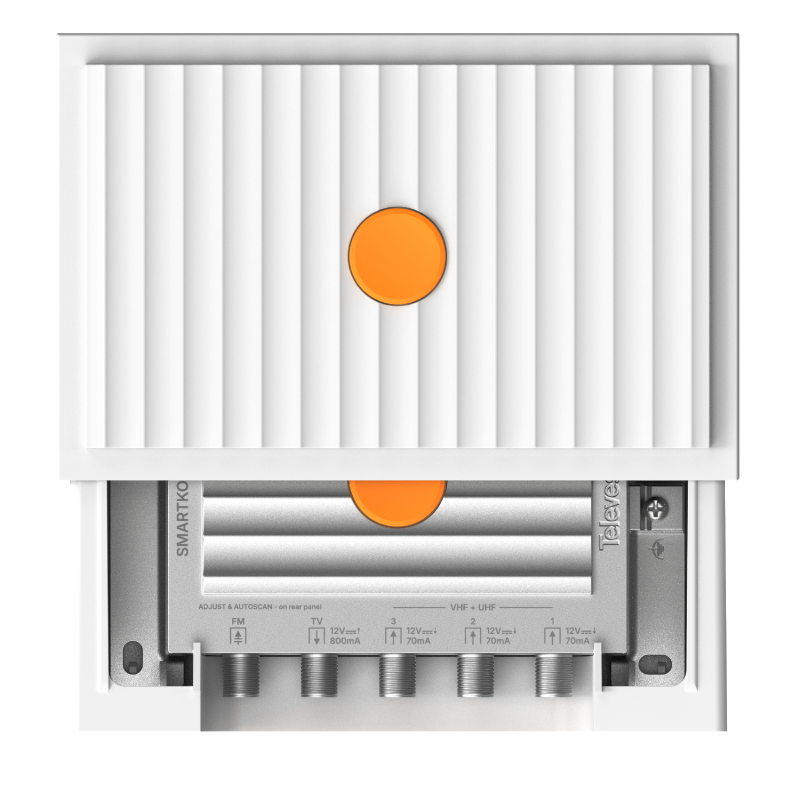
A single device to filter, combine, amplify and balance TV signals.
In a television installation, an amplifier is essential to ensure an adequate signal level at the user outlet. However, it is also necessary to filter out unwanted signals (e.g. mobile communications) and compensate for level differences between channels before distribution.
SmartKom has been designed to meet these needs in single-family homes and small communal installations. It combines filtering, mixing, amplification and signal-balancing functions, reducing the number of components in the installation and avoiding the associated losses.
Its digital processing handles each channel independently using 32 highly selective programmable filters, even between adjacent channels. This provides programming tailored to each installation and optimum balance across all channels.
Its very low noise figure (<3 dB), together with installation close to the antenna, allows the signal to be amplified with minimal degradation in quality, preserving MER, a key factor in DVB-T2 broadcasts. It also includes a SAW filter that eliminates 4G/5G interference while fully preserving the television band.
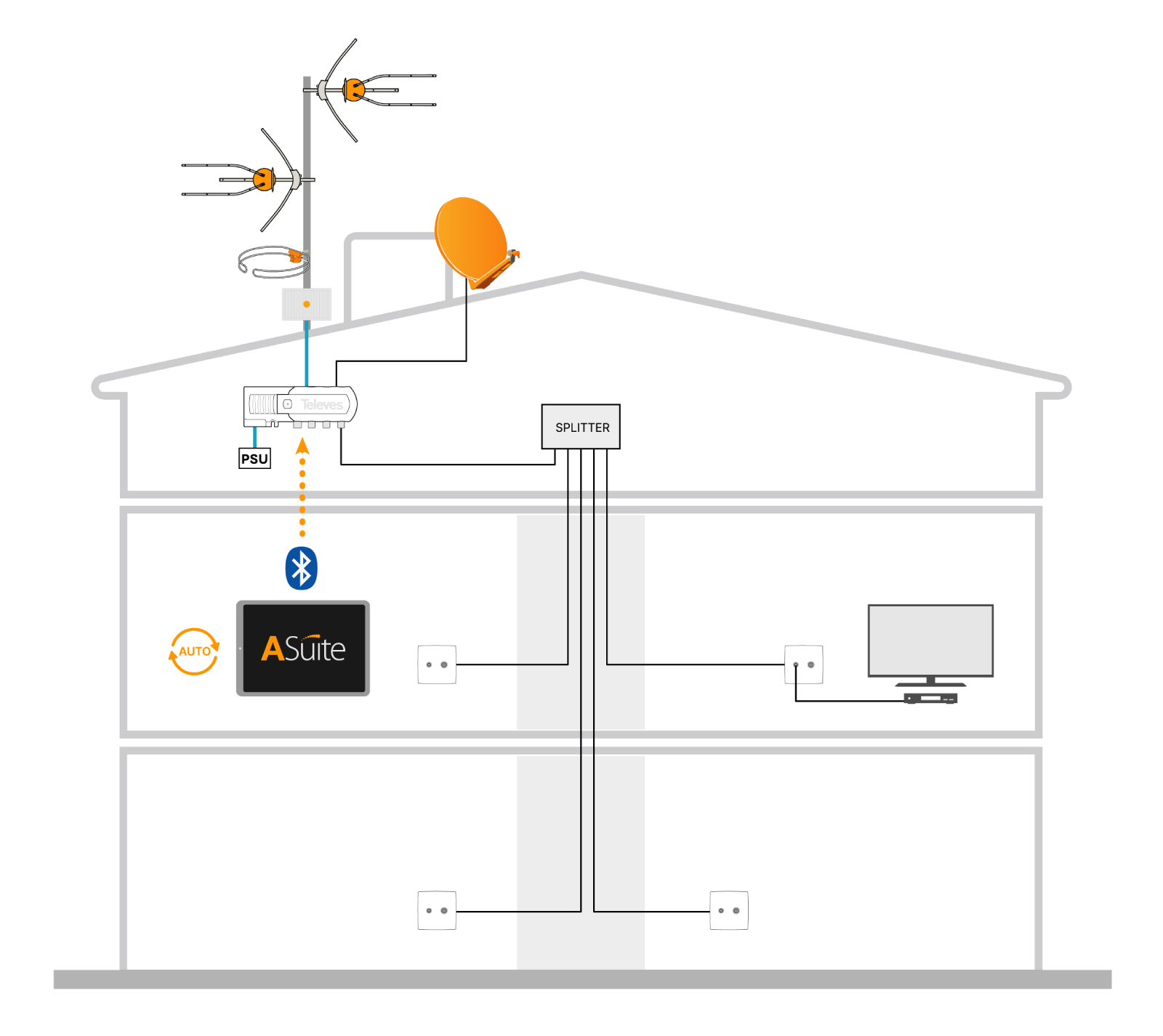
The solution includes a power supply installed inside the home and inserted into the coaxial distribution network to power SmartKom through its output connector. The power supply includes Bluetooth® connectivity and allows SmartKom to be paired with a smartphone or tablet for configuration using the ASuite application.
Channel balancing is one of SmartKom's main functions. From the ASuite mobile application, the installer can start auto-programming so that SmartKom processes signals, programs filters and balances the level of all channels in less than a minute. Advanced programming is also available, allowing professionals to customize channels and adjust levels.
Its new fully shielded chassis with F connectors reduces its size compared with the previous model, making mast mounting and installation easier without compromising the robustness and reliability associated with SmartKom.
Training
RF frequencies: from broadcasting to mobile communications
Understanding how the radio spectrum is organized is becoming increasingly important for interpreting the evolution of communications networks and the new solutions developed by Televes.
Traditionally, terrestrial television has used the UHF band (470-862 MHz) to carry signals from transmission centres to receiving antennas. Spectrum organization therefore tends to vary from country to country. For example, terrestrial television in Italy still also uses the VHF band, whereas in Spain this band is used for services such as digital radio (DAB and DAB+).
Above this band is the intermediate frequency range (950-2150 MHz), used in satellite television installations. CATV networks also use higher frequencies (up to 1.8 GHz) for data transmission via DOCSIS.
The first mobile networks were developed within this spectrum structure, initially using bands close to television frequencies, around 900 MHz. As they evolved, new bands were introduced to support technologies such as 2G, 3G, 4G/LTE and 5G.
The growth of mobile networks created a need for more spectrum. To address this, some of the frequencies used by terrestrial television were reassigned through the digital dividends. As a result, the 800 MHz band and later the 700 MHz band were allocated to mobile services thanks to their better propagation characteristics, which help extend coverage and improve penetration inside buildings.
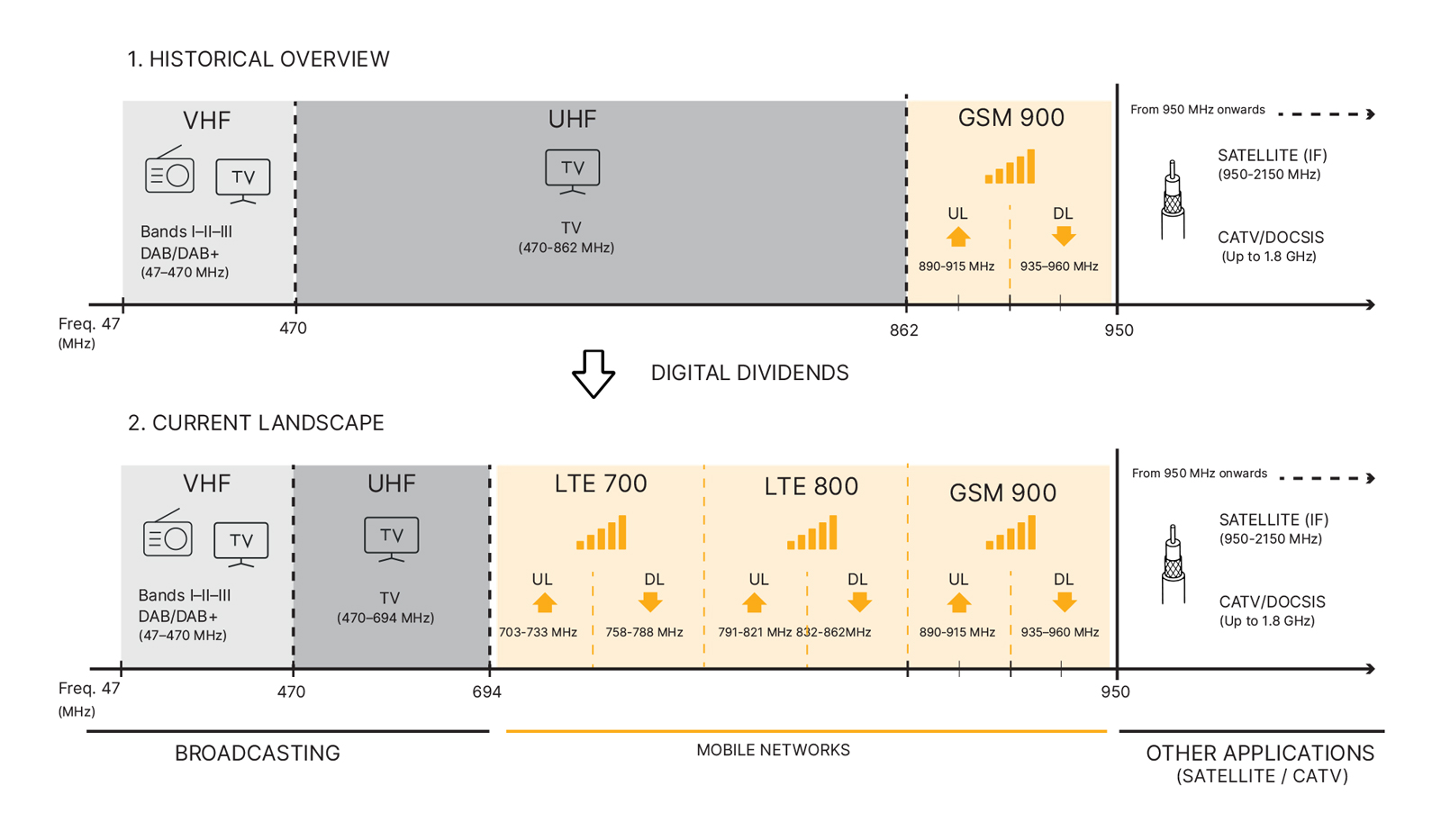
Evolution of the radio spectrum
Today, terrestrial television in Europe occupies the UHF band up to channel 48 (694 MHz), while different bands above this frequency are allocated to mobile networks. Their use depends on the spectrum planning adopted in each country.
Unlike television, where communication is exclusively downstream from the transmission centre to the receiver (Downlink or DL), mobile networks are bidirectional. Each terminal not only receives information from the base station, but also transmits data back to it (Uplink or UL). This difference determines how the radio spectrum is organized.
In bands that use FDD (Frequency Division Duplex), UL and DL use different frequency blocks to transmit and receive simultaneously. By contrast, TDD (Time Division Duplex) bands share the same frequency band and alternate transmission and reception periods over time.
The evolution of the radio spectrum has opened up new opportunities for mobile communications. For decades, we have designed solutions to operate in these frequency bands, historically linked to television distribution. That experience now enables us to develop solutions for 4G and 5G networks.
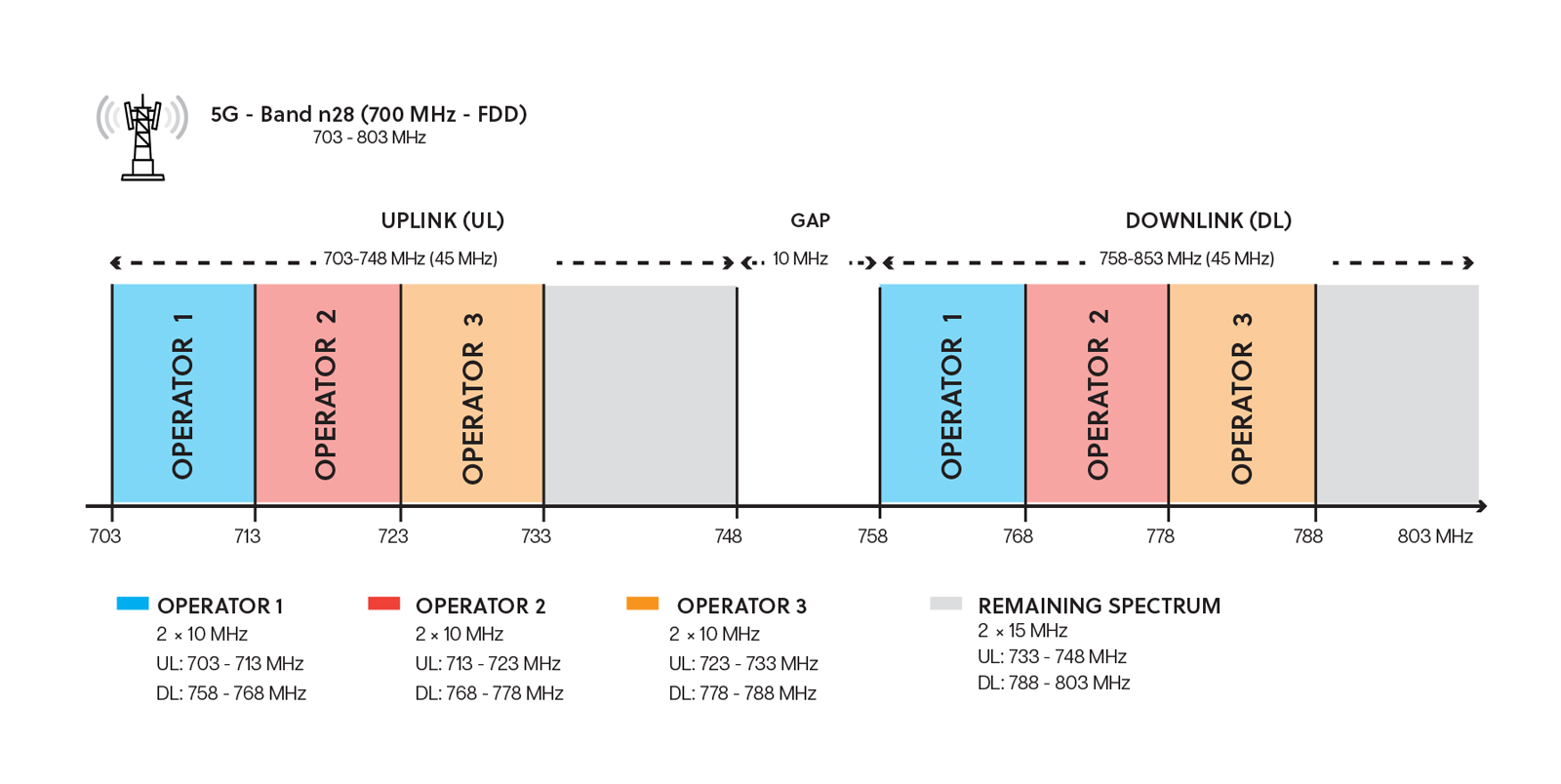
Example of a hypothetical allocation of the n28 band
FAQs
How can I protect multifibre cables against moisture?
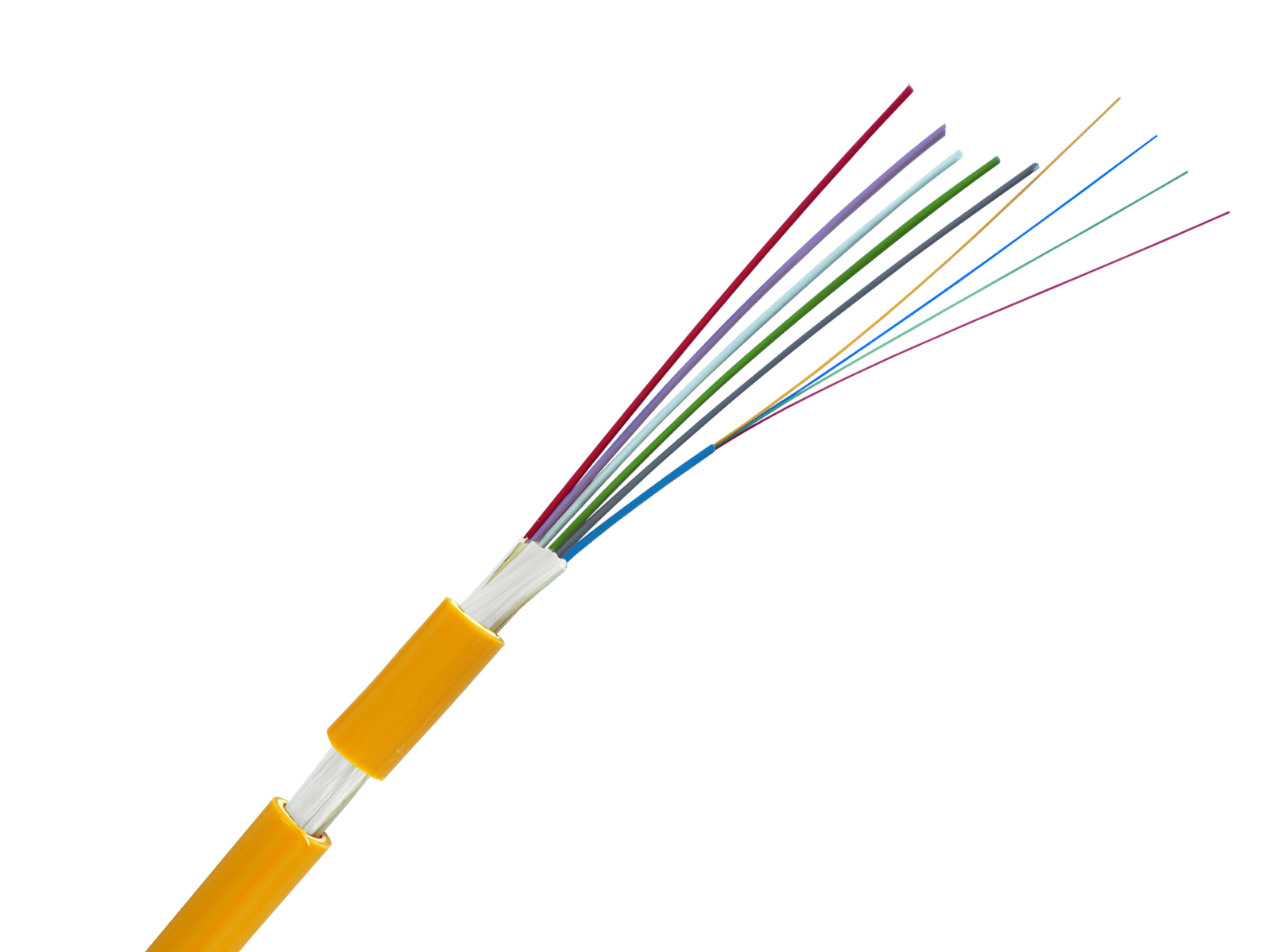
Water ingress can compromise the reliability of a fibre-optic cable. Although the risk is greater in outdoor or underground installations, it can also occur in ducts, technical rooms or indoor routes where condensation is present.
Moisture can alter the optical properties of materials, increasing attenuation, while also encouraging corrosion processes or damage associated with freeze-thaw cycles.
To reduce these risks, multifibre cables can incorporate different protection systems. Water-blocking gel fills the inside of the micromodules and helps prevent water from spreading. Water-blocking yarns absorb it and swell on contact, limiting its advance. Another solution is the use of PBT loose tubes, which house and isolate the fibres from environmental conditions.
The most suitable solution depends on the cable design and application. In all cases, our FK multifibre cables incorporate moisture protection to preserve the fibres and their optical properties.
Televes facilities
Hotel Selenta Don Carlos, Marbella, Spain
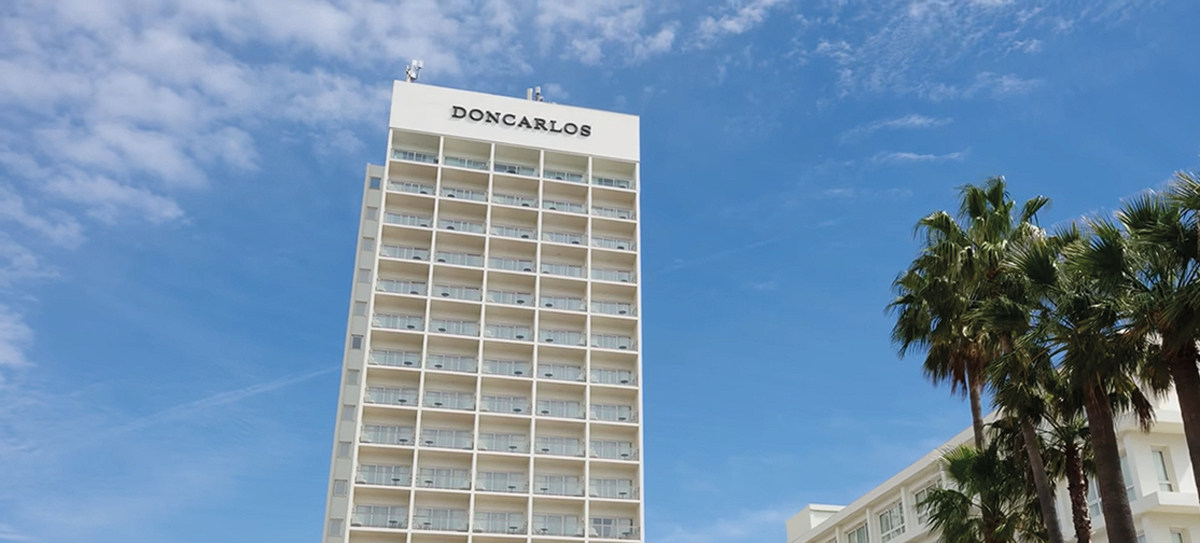
Following its renovation as an exclusive five-star resort, Hotel Selenta Don Carlos Marbella has enhanced its guests' digital experience with a Televes Hospitality solution.
The installation integrates an IPTV headend, ArantiaTV, ArantiaCast, digital signage and high-performance network electronics, providing IP television, private and secure 4K casting from any mobile device, and personalized content.
A scalable, centrally managed infrastructure that optimizes hotel operations and provides a modern, intuitive entertainment experience in keeping with a leading property on the Costa del Sol.
Televes in the world
ATS, HITEC and TMP
ATSC | Washington, USA (June 1-3)
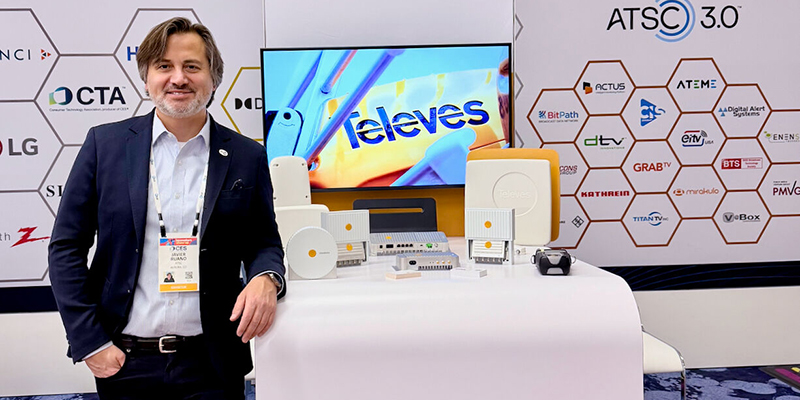
We presented our comprehensive proposal for ATSC 3.0 networks, from signal transmission through to reception. Our Televes USA Director, Javier Ruano, also moderated a technical session on NextGen TV network design and met with customers and visitors throughout the event.
HITEC | Texas, USA (June 15-18)
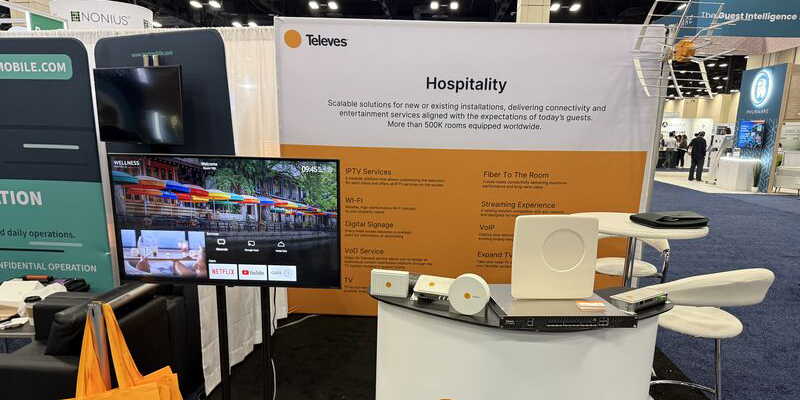
Our Hospitality Director, David Serramiá, represented Televes with its full range of advanced solutions for hotel infrastructure network management, guest audiovisual services and the integration of the property's digital systems.
TMP | Munich, Germany (July 9)
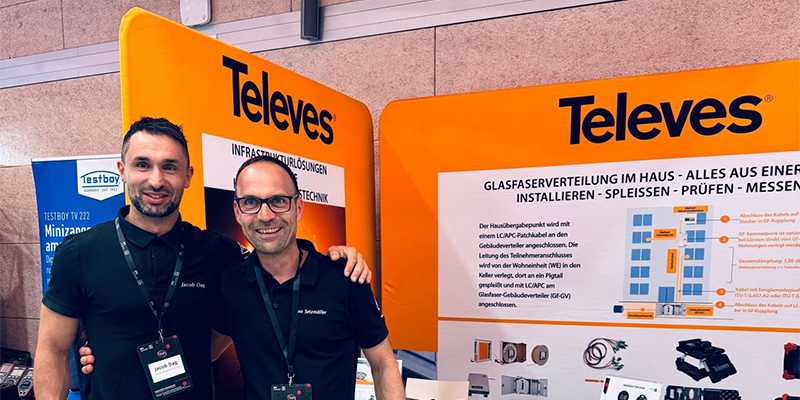
The event brought the hotel sector together with the technology ecosystem. Televes showed how a Televes GPON network infrastructure integrates all the audiovisual services guests expect, as well as the hotel's digitalized systems.
Our people
Ángela Abreu, Head of the Technical Office and Pre-Sales Department
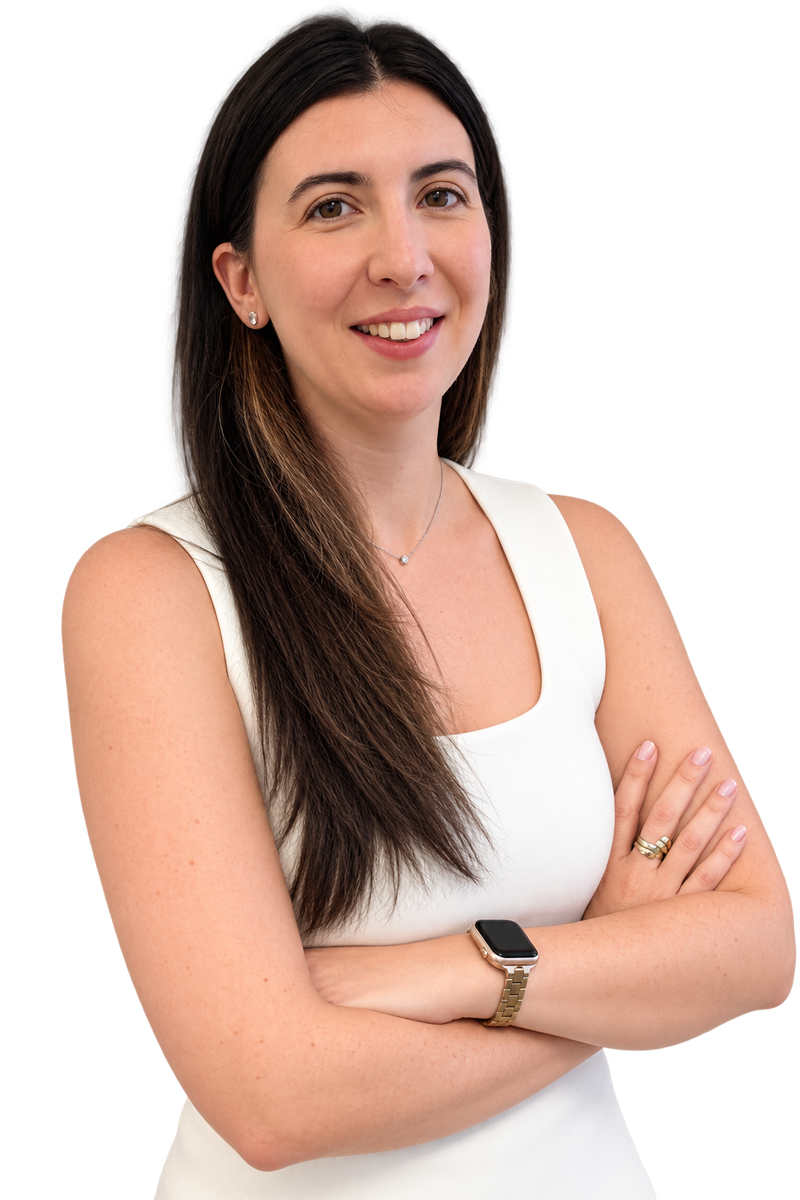
A thorough preliminary technical analysis helps reduce implementation costs and ensure project success from the outset.
The Technical Office and Pre-Sales Department (OTP) has become a key differentiating value for Televes, supporting the sales network from the definition of each project. Its preliminary technical analysis optimises solutions, reduces implementation costs and risks, and provides a high-value service integrated into the Televes proposal.
What does your job involve?
I lead the Technical Office and Pre-Sales Department, working with the sales teams to turn each customer’s needs into viable, innovative solutions tailored to each project. This preliminary study makes it possible to optimise the design and facilitate more efficient implementation, at no additional cost to the customer.
How long have you been with the company?
I joined Televes in February 2022 as a pre-sales engineer in Hospitality. This stage has allowed me to gain a global view of the business and take on new challenges.
What is the most satisfying and the most challenging part?
Seeing how an idea becomes a successful project thanks to teamwork. The biggest challenge is balancing expectations, technical feasibility and business objectives.
Which values would you highlight?
Teamwork and customer focus. Collaboration between departments allows us to offer solutions with real and distinctive value.
Televes Corporation
Europe is building the new industrial competitiveness
European industry is facing a paradigm shift. The entry into force of Regulation (EU) 2023/956, establishing the Carbon Border Adjustment Mechanism (CBAM), and Regulation (EU) 2024/1781, on Ecodesign for Sustainable Products (ESPR), is driving a model in which competitiveness depends on factors beyond price. Material traceability, process efficiency, a reduced environmental footprint and manufacturing quality are becoming key factors for competing.
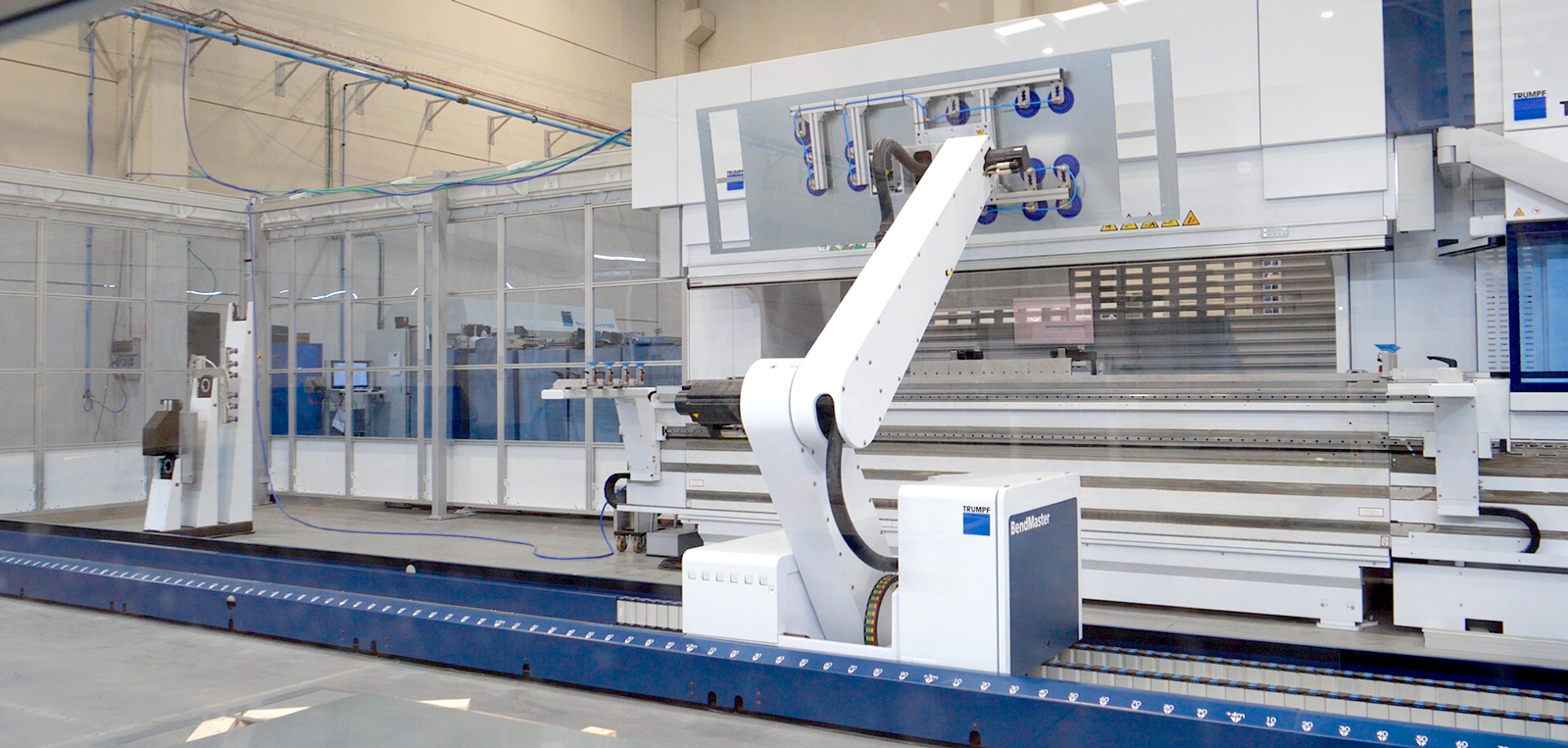
Advanced industrial companies must respond to an increasingly demanding environment from a technical, regulatory and organizational standpoint. At Gamelsa, this evolution is reflected in investments aimed at increasing production efficiency and flexibility through automated storage systems, industrial automation and robotics solutions that optimize workflows, improve material management and strengthen responsiveness.
At the same time, manufacturing for highly regulated sectors such as rail requires certified processes, qualified personnel, specific inspections and rigorous document control. A combination of technological innovation, industrial specialization and operational excellence that positions Gamelsa in line with the new model of industry promoted by Europe: more resilient, sustainable and competitive.
Announcement
Series A6, A6 MIX and A9 - Intelligent antennas that evolve with high-density modulation TV